Retail property · Loyalty app · Digital Product
Parking Module Experience Design for Loyalty Membership Mobile App
Introducing a new mobile app feature for a membership program, with zero product requirement.
Overview
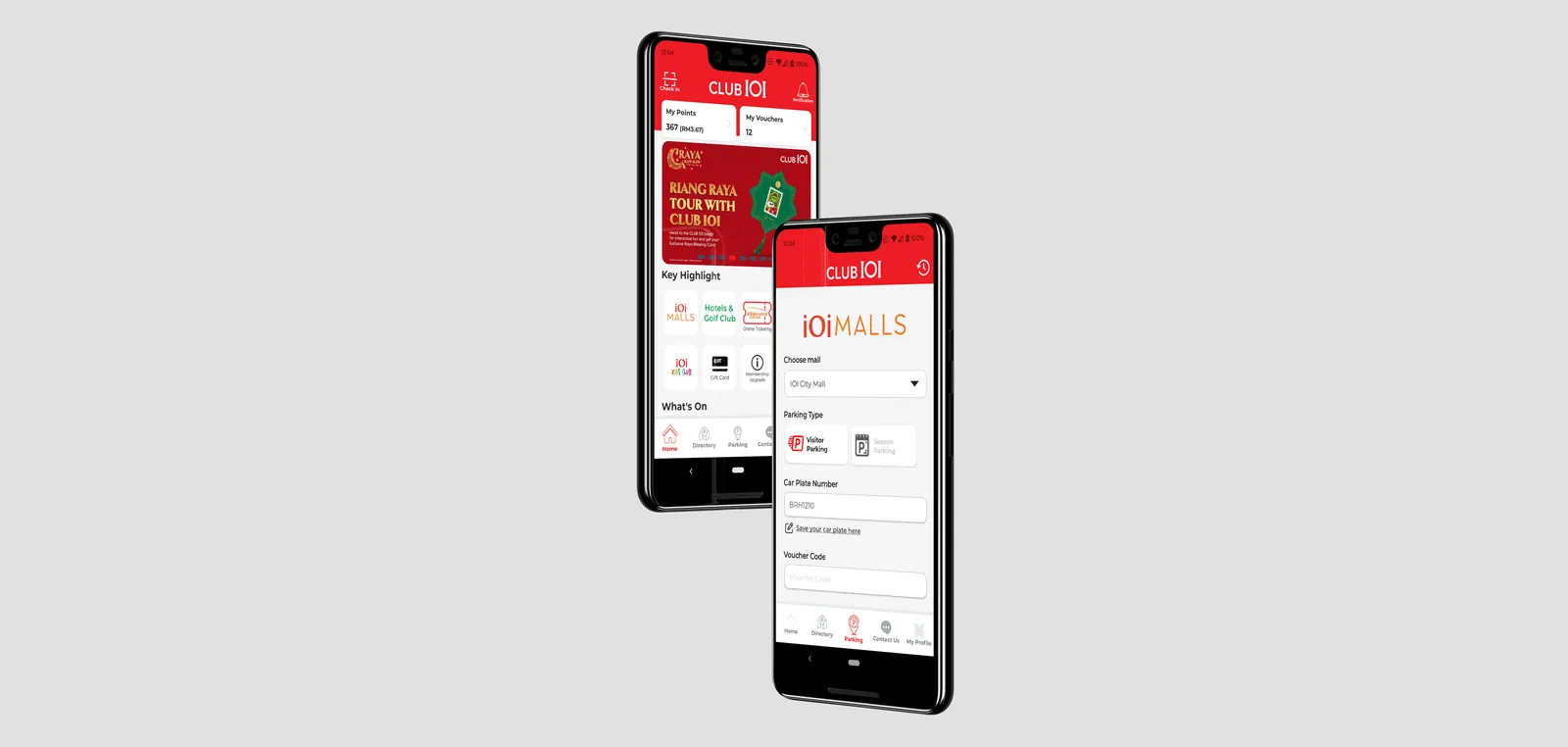
CLUB IOI is the membership application for IOI malls located in Kulai, Damansara, Putrajaya, and Puchong.
The business direction was to introduce a parking feature inside the existing membership ecosystem. The high-level intentions were:
Enable parking fee payment via the app
Allow members to convert loyalty points into parking credit
Support multiple digital payment methods
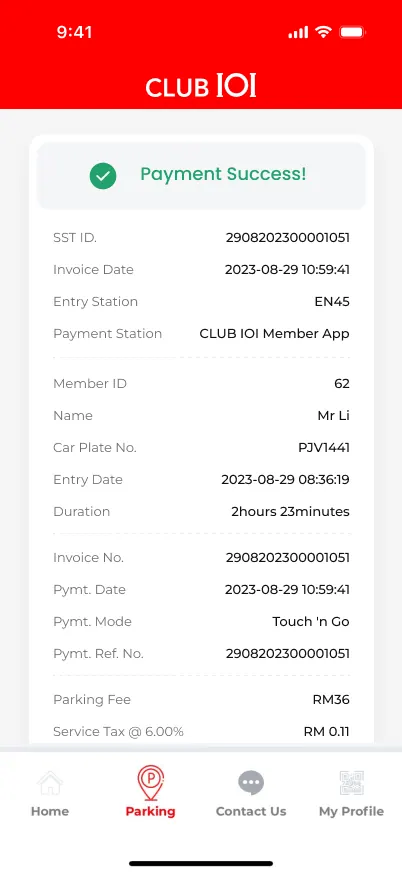
Provide digital receipts
Deploy across multiple IOI malls
However, there was no PRD, no requirement documentation, and no defined user flows. The original project manager had resigned, leaving only broad expectations.
The feature did not exist before.
It had to be defined, structured, and built from scratch.
Problem
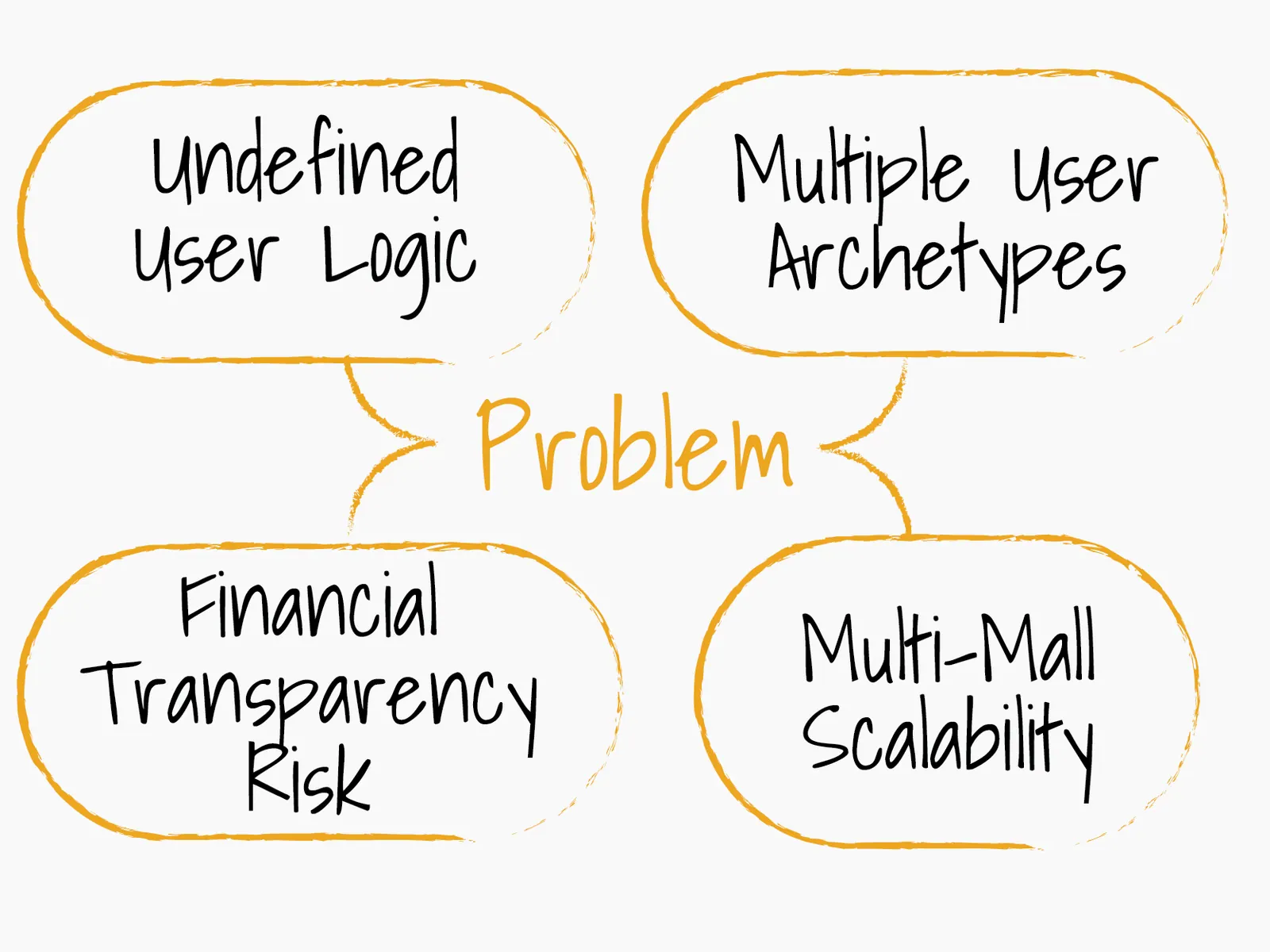
The absence of documentation created deeper structural issues:
1. Undefined User Logic
There was no clarity on:
Visitor vs season pass journeys
Points redemption logic
Partial payments
Failed transaction states
Receipt variations
Without defining these, the feature would collapse under edge cases.
2. Multiple User Archetypes
Parking is not one user behavior.
Casual Visitor – drives in occasionally, pays per session
Season Pass Holder – recurring monthly access
Member with Points – hybrid logic between loyalty and payment
Each archetype demands different interaction and financial logic.
3. Financial Transparency Risk
When points are convertible into parking credit:
Users expect clear deduction breakdown
Partial payments must be explained
Receipts must reflect points vs cash value
Without clarity, disputes are inevitable.
4. Multi-Mall Scalability
The solution needed to:
Work across multiple IOI malls
Handle different parking rates
Remain modular for backend rule changes
Strategy
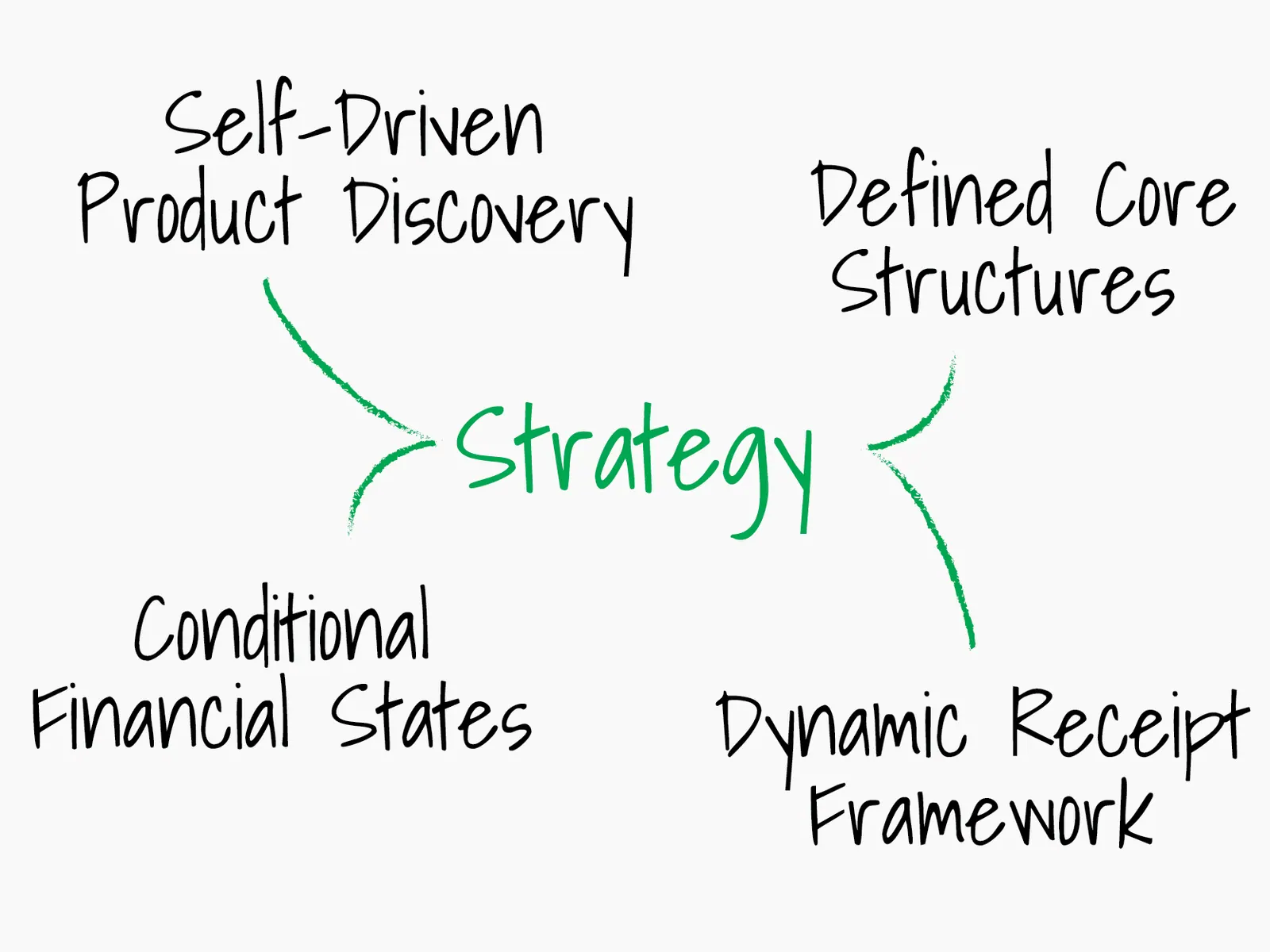
With no documentation available, I reconstructed the product from first principles.
1. Self-Driven Product Discovery
I simulated the entire parking journey myself:
Driving in
Checking parking fee
Considering season pass
Attempting to redeem points
Paying with different methods
Viewing receipt history
I effectively became the user and wrote the logic through experience mapping.
2. Defined Core Structures
I divided the system into two primary modules:
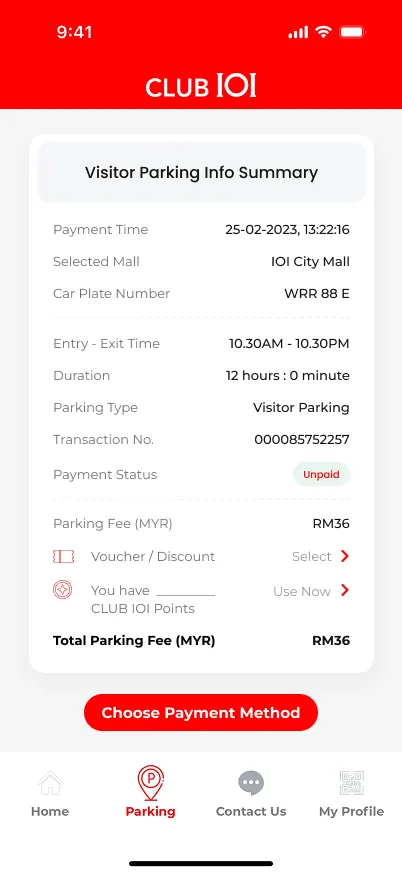
Visitor Parking
Active session detection
Fee calculation
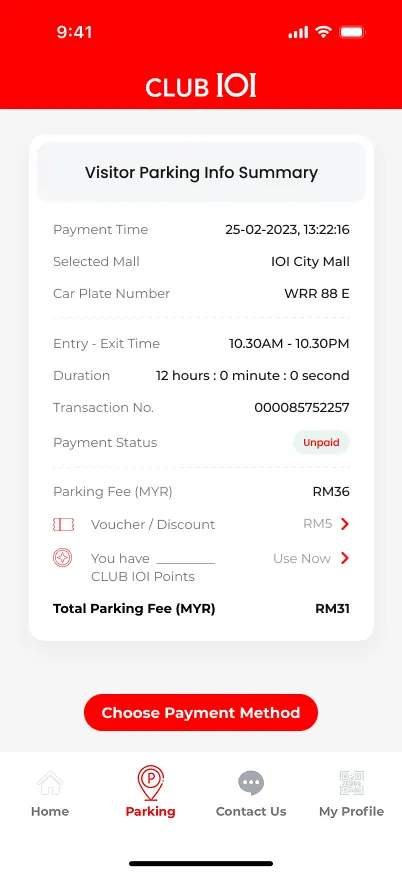
Points redemption
Payment selection
Confirmation
Receipt generation
Season Parking
Pass overview
Renewal flow
Payment integration
Receipt archive
This separation avoided logic collision.
3. Designed Conditional Financial States
The system accounts for:
Full payment via points
Partial points + payment method
Full payment via card/e-wallet
Failed transactions
Expired sessions
Each state has:
Clear breakdown
Transparent deduction
Unified confirmation pattern
4. Payment System Integration
Supported:
Debit / Credit Card
Boost
GrabPay
Touch ’n Go
Loyalty Points
All payment methods feed into a consistent confirmation and receipt structure to reduce cognitive overload.
5. Dynamic Receipt Framework
Receipts dynamically reflect:
Mall location
Parking duration
Parking fee
Points redeemed
Final payable
Payment method
Transaction status
Built to scale across all IOI mall locations.
Execution
Information Architecture
Constructed the module hierarchy from scratch:
Entry detection
Active session
Payment logic
Points logic
Confirmation
History & receipts
Interaction Principles
Financial clarity first
Reduce branching anxiety
Show breakdown before commitment
Keep confirmation consistent
Minimize payment friction
Modular Scalability
Designed components to:
Adapt to different mall configurations
Allow backend rule adjustments
Add future payment methods without redesign
The UI was built as a flexible system, not static screens.
Outcome
Transformed a vague directive into a structured product module
Reduced ambiguity through defined user archetypes
Prevented future financial confusion through transparent breakdown logic
Established scalable structure for multi-location deployment
Impact
Complete parking module conceptualized and designed from zero
User flows defined without formal PRD
Points-to-parking conversion system introduced
Multi-payment infrastructure integrated
Scalable across four IOI malls
You may experience the latest app from App Store (Apple) & Play Store (Android)
With thanks to Phng Jia Yun & Jia Yee.