Non-profit · Retail property · Visuals · Systems
Scalable Campaign Visual & Communication System
Designing a centralized campaign visual system from ideation to adaptations stage for digital and print medium
Overview
A campaign is not just a visual output. It is a structured communication system that combines visual direction, copywriting, and sometimes motion to achieve specific business objectives. Depending on the target metric — revenue, membership growth, reach, lifetime value, or call-to-action — the intensity and scale of execution vary significantly.
In practice, campaign complexity is rarely defined by a single key visual. It is defined by how far that visual must travel. While rare cases like Apple’s “1984” Super Bowl commercial can achieve global impact through a single execution, most campaigns rely on systematic adaptation across multiple touch-points to drive results.
Problem
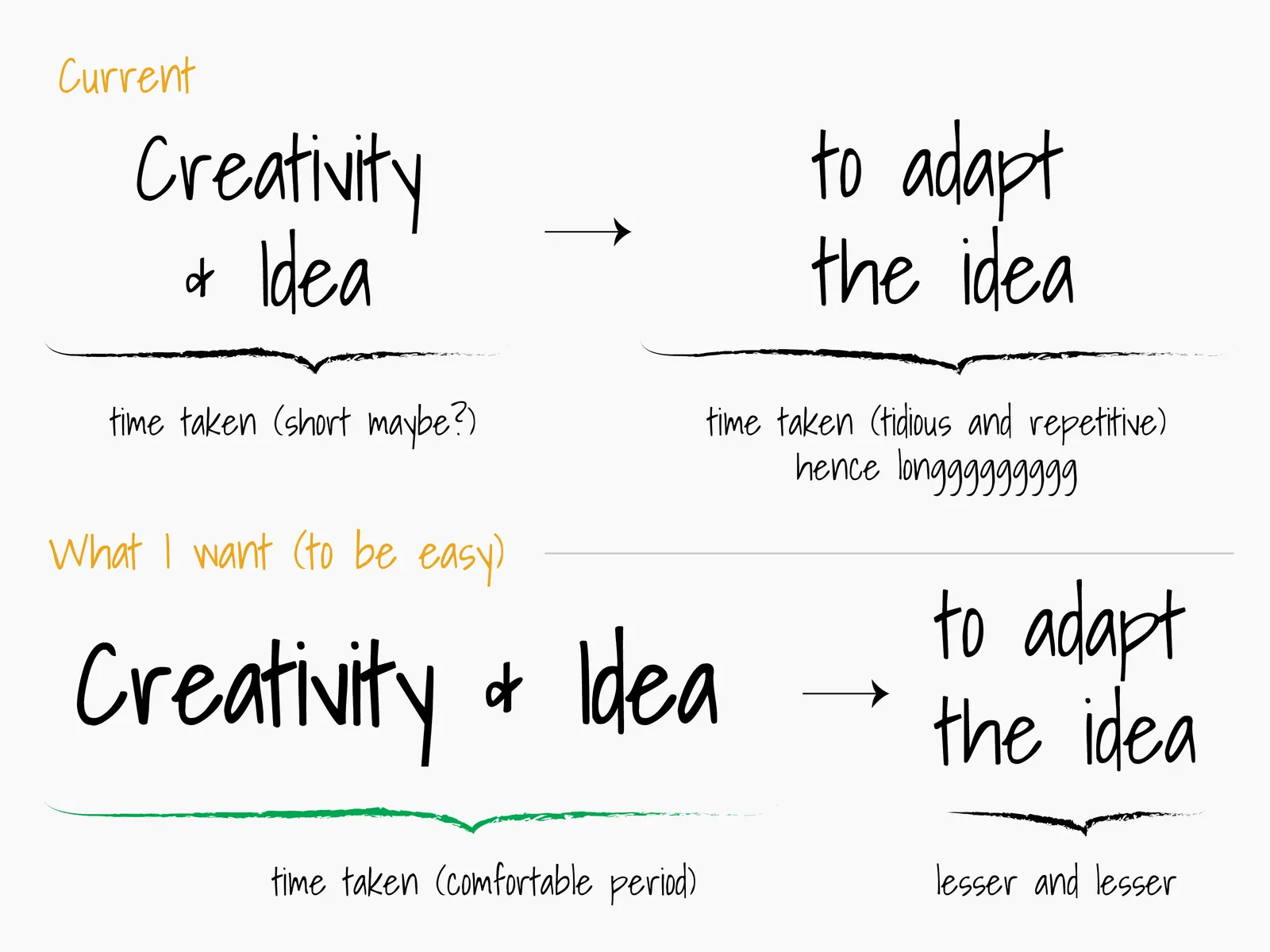
The core challenge in campaign work is not just creating one strong visual. It is ensuring that the idea is strong and remains flexible, scalable, and consistent across different formats, sizes, and communication channels.
As campaign scale increases, complexity grows exponentially. More deliverables mean more layout variations, more coordination, tighter timelines, and greater approval layers. Without a structured system, visual consistency and message clarity deteriorate quickly.
The propose solutions also require high level of responsiveness when any amendments are required.
Strategy
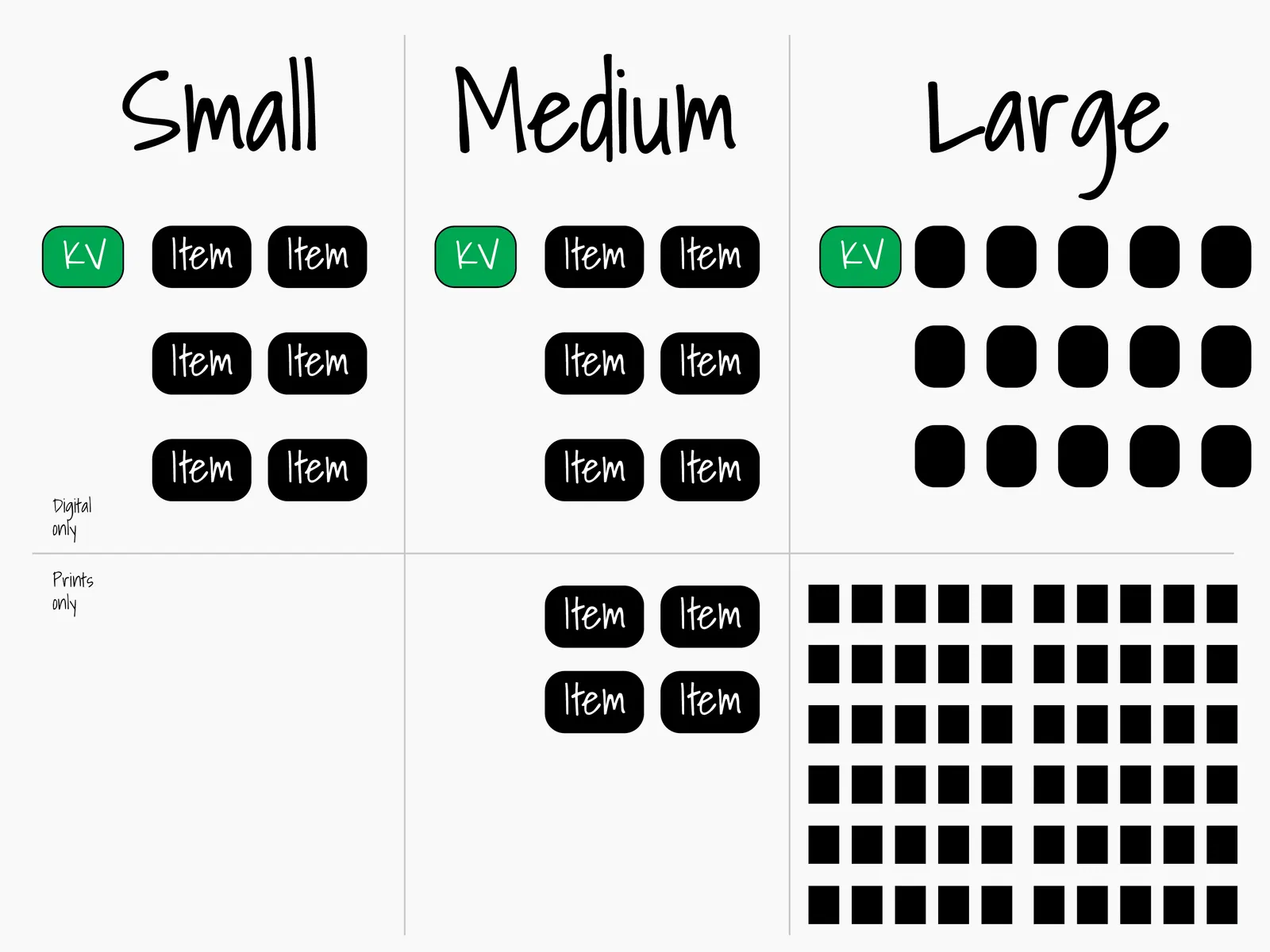
Over time, I categorized campaign scale into three tiers based on execution volume:
Small scale campaigns typically involve fewer than seven deliverables, often focused on specific announcements or limited promotions.
Medium scale campaigns range between ten to fifty items, requiring adaptation across digital, print, and on-ground materials.
Large scale campaigns exceed one hundred items and demand rigorous visual systems to maintain consistency across all communication platforms.
Regardless of scale, the process follows a structured flow: understanding the brief, gathering inspiration, defining the masthead direction, creating the key visual, testing copy placement, producing two to three design options, and adapting the layout into core sizes to test flexibility before final approval. Only after approval does full adaptation begin.
The difference between small and large campaigns lies in the depth and volume of this final stage, also the approval tiers.
Execution
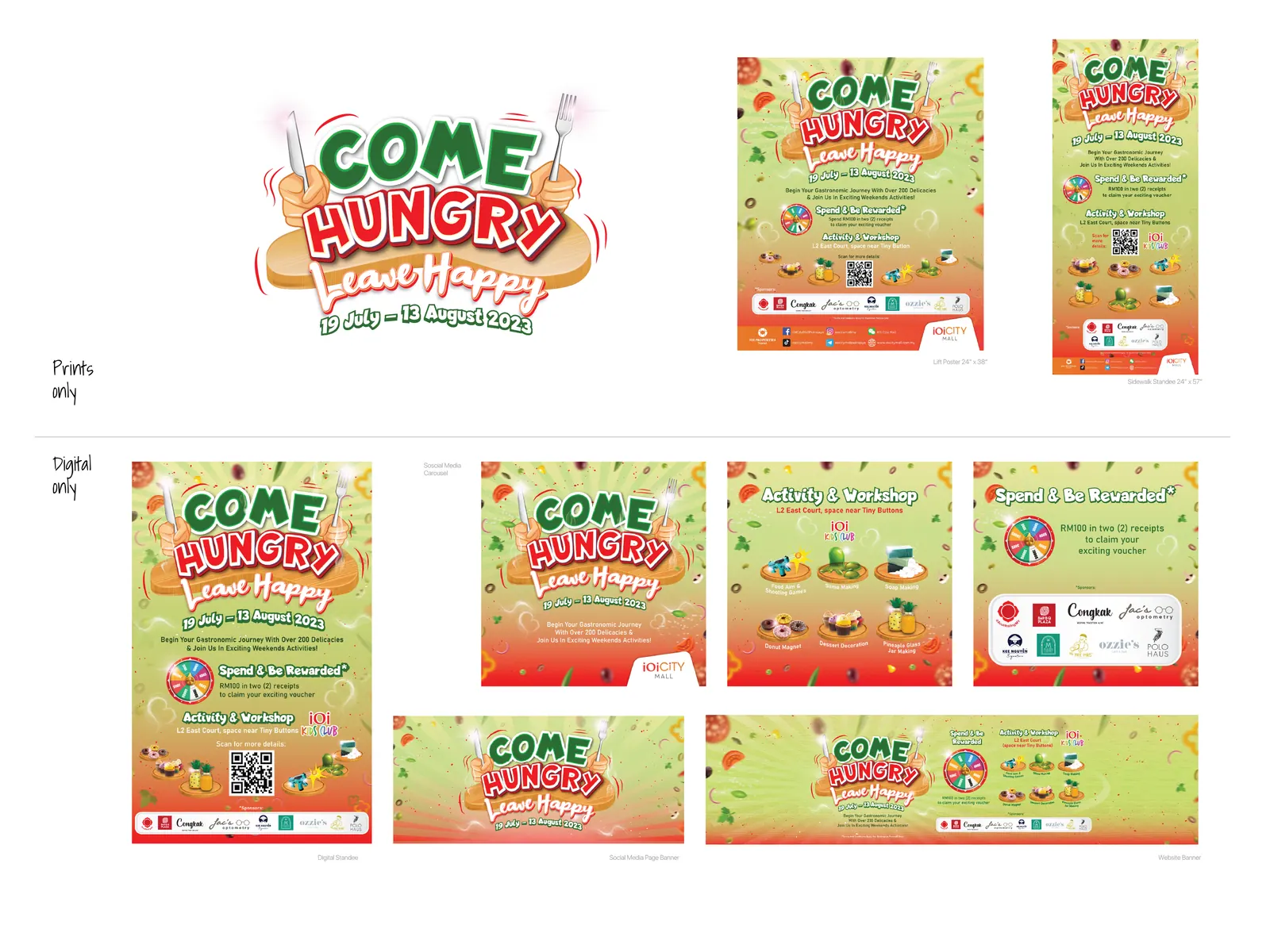
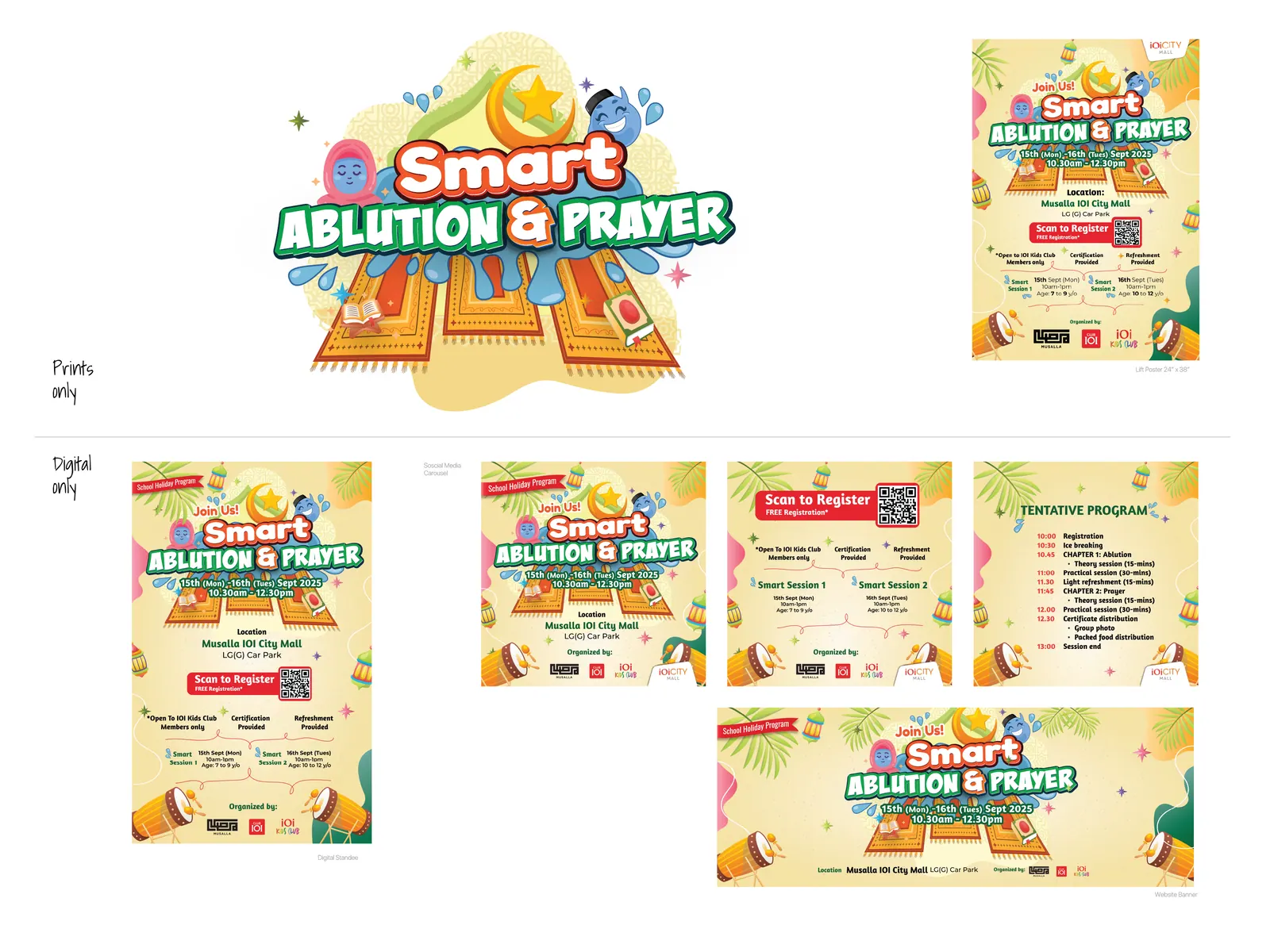
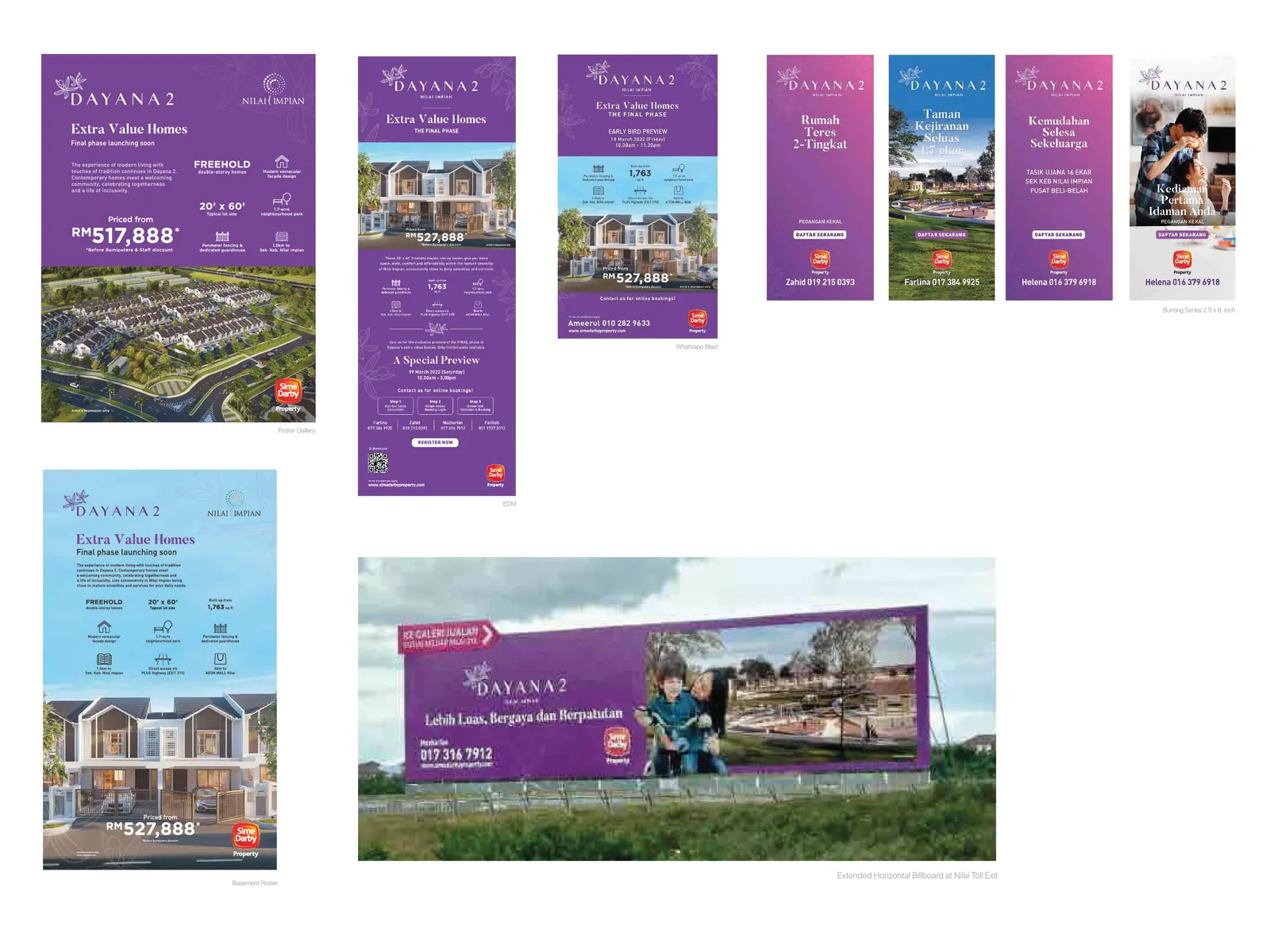
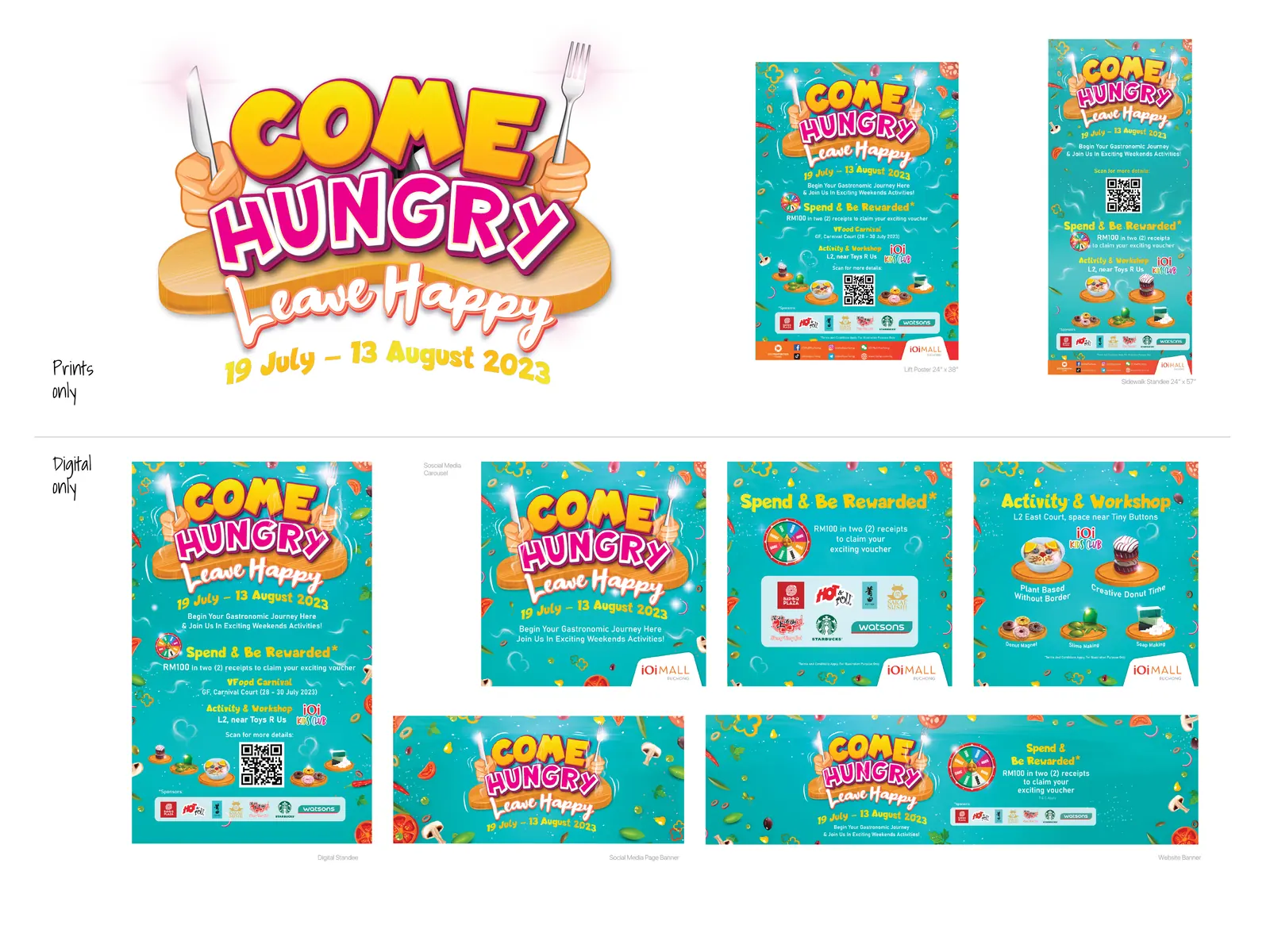
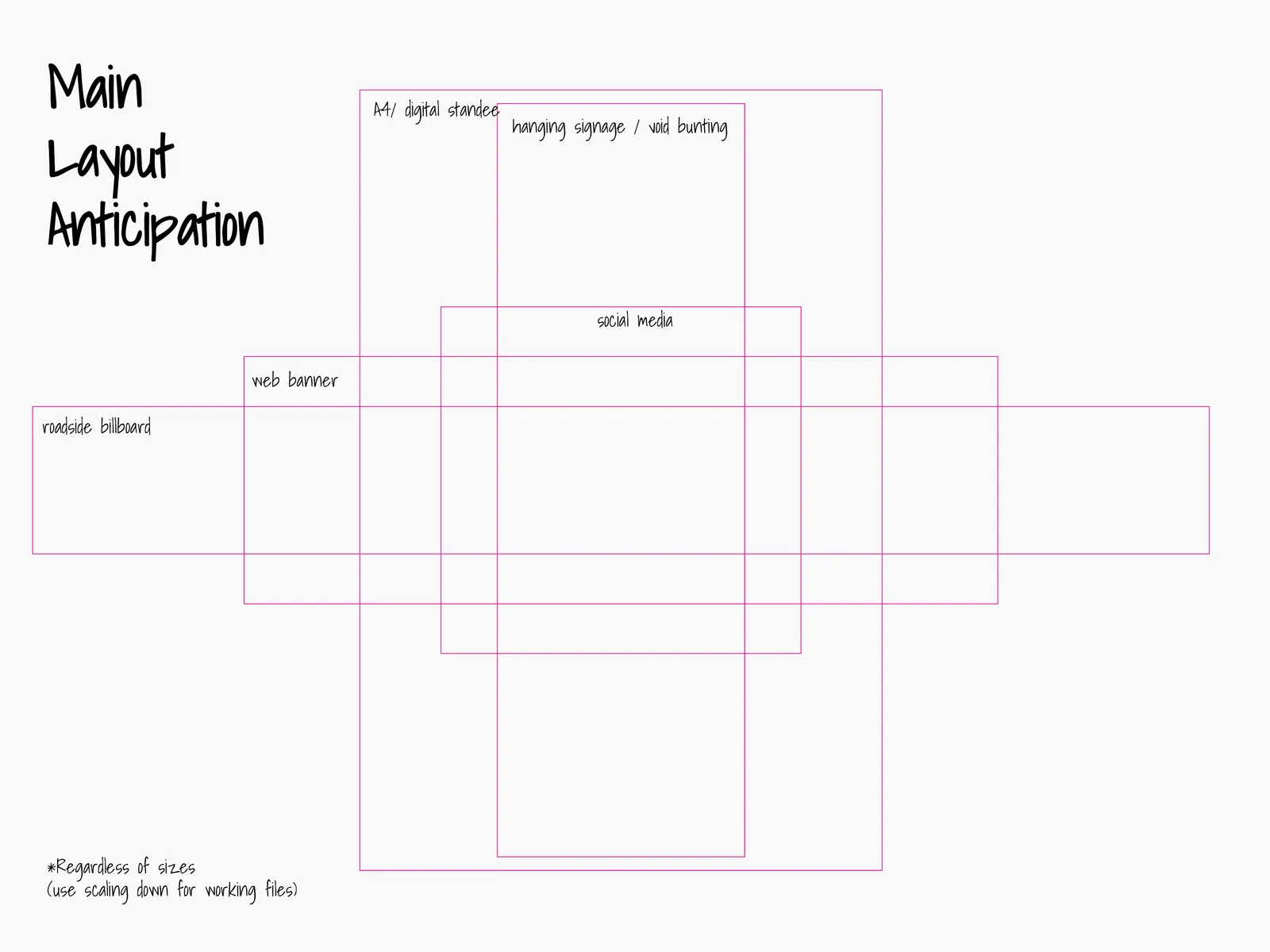
For each campaign, the masthead and key visual serves as the anchor. From there, a modular layout system is built to accommodate various formats — social media, banners, signages, web assets, print collaterals, and environmental graphics. Testing adaptability early prevents breakdown during mass rollout.
Campaign examples across different scales include:
brand identity projects
festive retail campaigns
loyalty promotions
in-mall navigation visuals
seasonal celebrations: such as Ramadan, Raya, Christmas, and New Year initiatives.
Larger campaigns required managing over one hundred adaptations while maintaining design coherence and production accuracy.
Outcome
Structured campaign systems reduced inefficiencies during adaptation and minimized visual inconsistency across channels.
By approaching campaigns as scalable systems rather than isolated artworks, execution became more predictable and aligned with business objectives.
Impact
This body of work reflects an understanding that campaigns are a mixture of ideation creativity and operational design systems. Their success depends not only on creativity but also on scalability, clarity of hierarchy, and disciplined rollout across multiple touch points.
With thanks to Aidil, Aiman | Ikram, Auni & Haziq | SZ, Akbar & Aisyah | Henry Tan, Wai Heng & Zairul Md. Zaman.